
Background photo: GTour (gtour.ge)
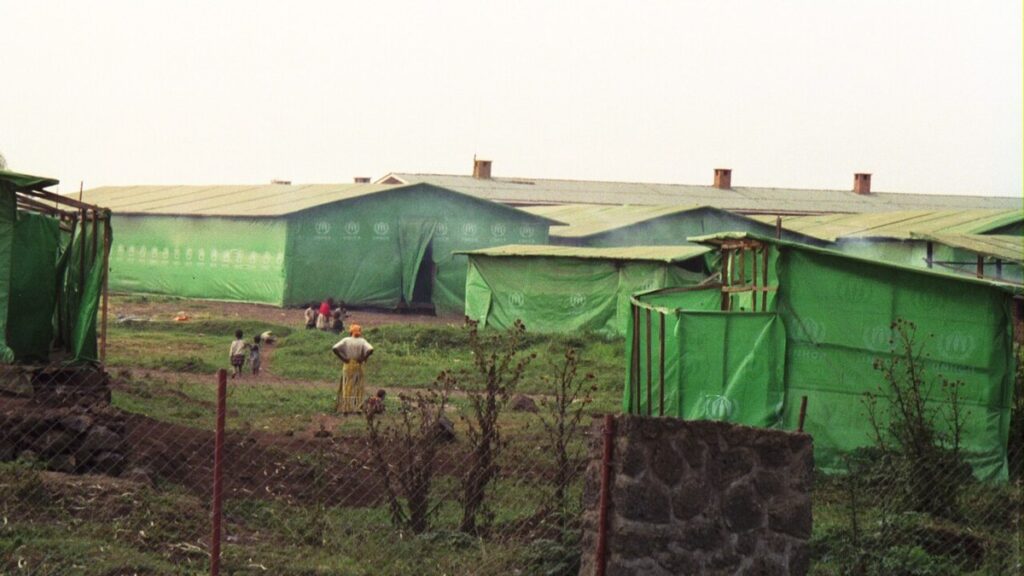
Photo: Philip Kromer / Wikimedia Commons (CC BY-SA 2.0)
The International Organization for Migration’s 2026 World Migration Report is a document that does not easily permit optimism. At the end of 2025, a record 117 million people were living in situations of forced displacement worldwide — the sixth consecutive annual increase, and the highest figure recorded since the IOM began systematic tracking.
- 117 million forcibly displaced globally — highest on record
- Only 23% of assessed countries have legal health access guarantees
- 35% of displaced adults over 40 have unmanaged NCDs
- Global humanitarian health spending covers ~38% of documented need
The health chapter runs to 47 pages and makes for difficult reading. Displaced populations carry a two- to three-fold higher burden of communicable diseases, mental health disorders and maternal health complications compared with host populations in comparable settings. Among displaced adults over 40, an estimated 35 per cent live with at least one unmanaged non-communicable disease — meaning no diagnosis, no treatment, no follow-up.
On health system responses, the report assessed 89 countries. Only 23 per cent have enacted explicit legal provisions guaranteeing health service access for migrants and displaced people regardless of documentation status. Of those, a further subset — the report does not quantify it — implement those provisions consistently in practice. The gap between law and delivery is vast.
The report identifies Central Asia and the South Caucasus as a region of growing concern. Labour migration corridors connecting Kyrgyzstan, Tajikistan and Uzbekistan with Russia and Kazakhstan carry specific health vulnerabilities: workers in construction and agriculture lack occupational health coverage and have limited primary care access. Seasonal migration patterns mean that health needs follow workers across borders that health systems do not cross.
On financing, the report calculates that global humanitarian health spending in 2025 covered approximately 38 per cent of documented need — a figure that has declined steadily since 2019 as the number of displaced people has risen.
The report’s central recommendation is that universal health coverage frameworks must explicitly include migrants and displaced populations — not as a secondary consideration but as a design requirement. Bilateral agreements on portability of health entitlements between origin and destination countries are also proposed as a practical short-term measure.
Source: IOM World Migration Report 2026. International Organization for Migration, Geneva.

Public Health Institute of Georgia


