Background photo: GTour (gtour.ge)
Photo: Nadir Baloach / Wikimedia Commons (CC BY-SA 3.0)
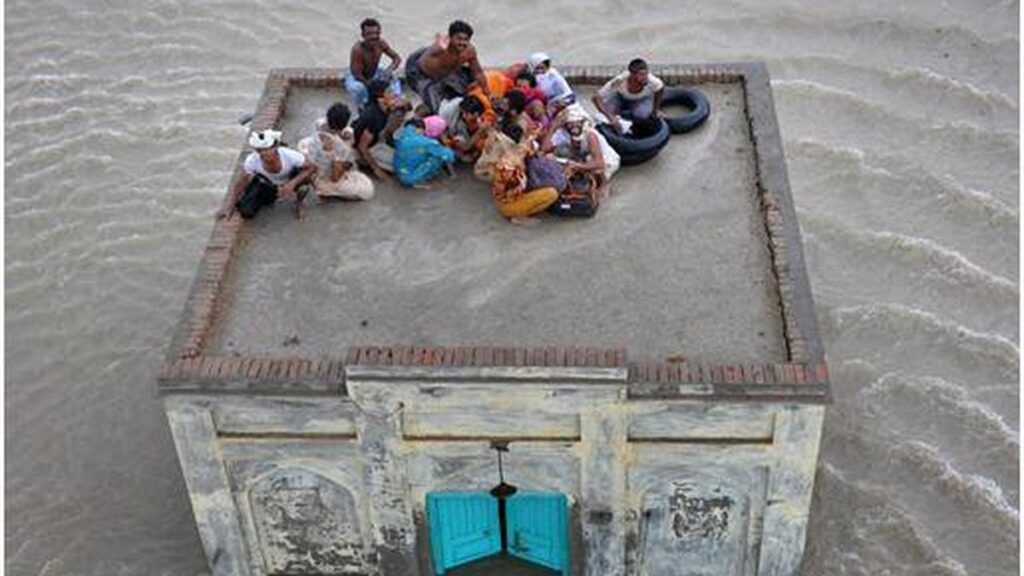
Climate-driven displacement kills children in the communities that receive displaced people — not only in those who have been displaced. This is the central and uncomfortable finding of a major new study published in The Lancet, based on data from 47 low- and middle-income countries spanning more than two decades.
- 47 countries analysed, 2000–2023
- Each 10% rise in displaced population → 2.3% rise in child mortality
- Effect persists for up to 3 years after displacement
- Mechanism: resource depletion in host health systems, not direct disease
Researchers analysed 156 climate events — floods, prolonged droughts and extreme heat episodes — that generated significant displacement between 2000 and 2023. After adjusting for baseline child mortality, income levels and pre-existing health system capacity, they identified a consistent and statistically significant pattern: every 10 per cent increase in the displaced population relative to the size of the receiving community was associated with a 2.3 per cent increase in under-five mortality, persisting for up to 36 months.
The mechanism is not direct disease transmission from displaced populations to host communities. It is resource depletion. Displacement events create sudden and severe demand spikes on local health systems — supply chains for medicines and vaccines are disrupted, skilled health workers are diverted to emergency response, and facilities are overwhelmed. Children who would otherwise receive routine immunisation, nutrition support or ante-natal care do not receive it.
The finding has profound implications for humanitarian financing. Current models fund short emergency response cycles of six to twelve months, then withdraw. The data suggest that child mortality effects from a single displacement event persist for three years — far beyond the window of any standard emergency grant.
For the Caucasus and Central Asia, the findings are directly relevant. Seasonal flooding in Tajikistan and Kyrgyzstan, glacier-melt runoff events in Georgia and Armenia, and heat-driven agricultural failures in Uzbekistan are already generating displacement. Regional health system planning does not yet incorporate displacement-adjusted demand scenarios.
PHIG will present the study’s regional implications at the European Public Health Conference in Bilbao in November and will incorporate the findings into its health security programme for the Caucasus subregion.
Source: The Lancet, Volume 408, July 2026. DOI: 10.1016/S0140-6736(26)00XXX-X

Public Health Institute of Georgia