
Background photo: GTour (gtour.ge)
Respiratory hygiene and cough etiquette are the first line of defence against respiratory pathogen transmission in healthcare facilities. Applied by patients, visitors and staff alike, these simple measures significantly reduce droplet and contact spread of influenza, COVID-19, pertussis, measles and other respiratory infections.
Respiratory hygiene — key actions
- Cover your mouth and nose when coughing or sneezing — use a tissue or the inner elbow; never cough into hands
- Dispose of tissues immediately into a lidded waste bin; do not leave used tissues on surfaces
- Perform hand hygiene immediately after coughing, sneezing or blowing nose — soap and water or ABHR
- Wear a surgical mask if you have respiratory symptoms and must be in a healthcare facility or public space
- Maintain spatial distance — at least 1 metre from others when symptomatic
- Stay home when symptomatic if your role allows — do not attend work in healthcare settings with fever and respiratory symptoms
Healthcare facility requirements
- Post respiratory hygiene instructions in Georgian (and other prevalent languages as appropriate) at facility entrances, registration areas, waiting rooms and triage points
- Provide tissues and no-touch waste bins in all waiting areas
- Provide ABHR or handwashing access at or near waiting area entry points
- Triage staff must actively identify symptomatic patients on arrival and provide surgical masks
- Separate symptomatic patients from other waiting patients where layout permits — dedicated seating minimum 1 metre from others
- Post respiratory hygiene posters in Georgian at all entry points — update seasonally during influenza, COVID-19 or other outbreak periods
ASF Patient-Safety Posters — Free, Print-Ready (A4) · Keep the ASF mark
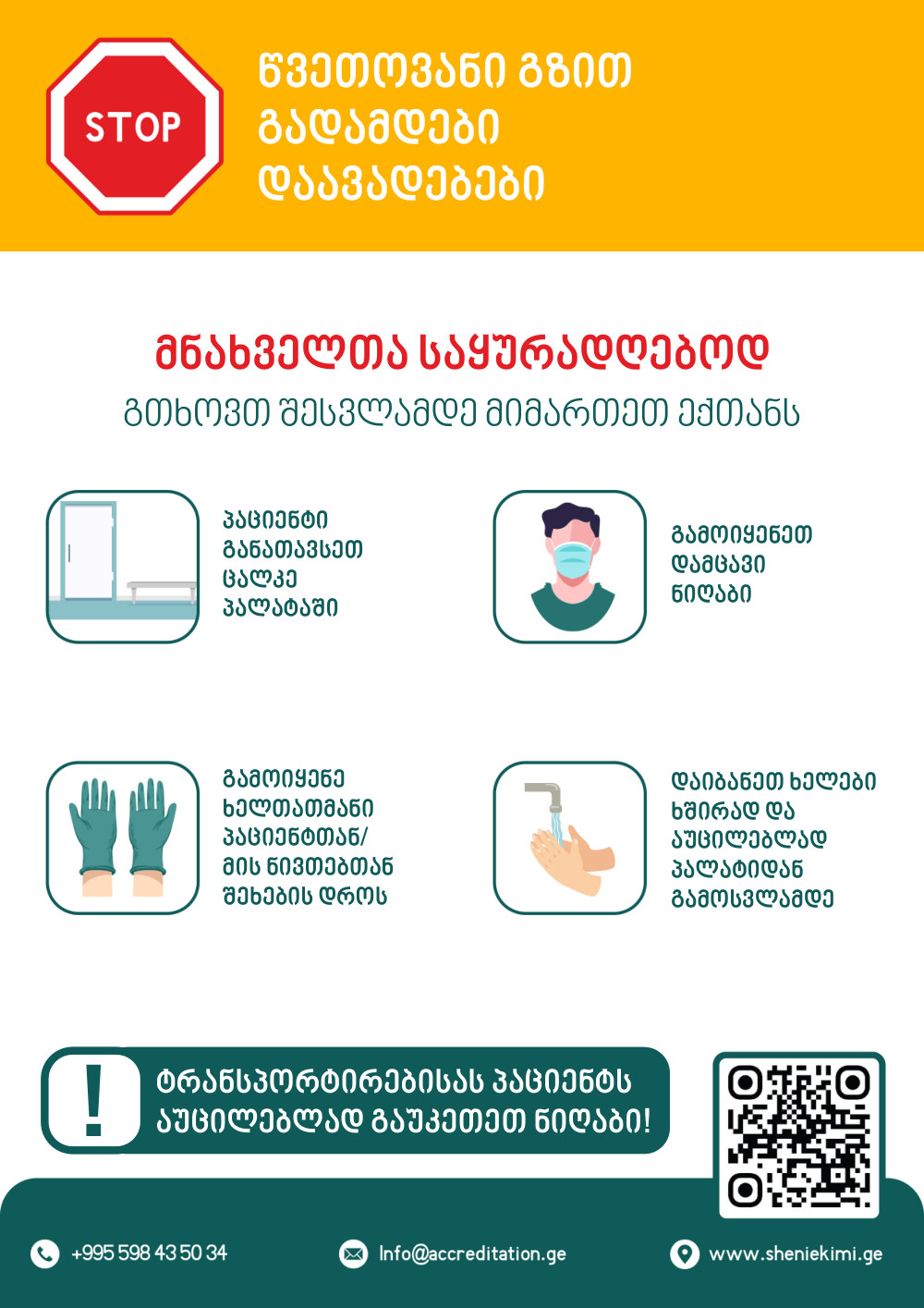
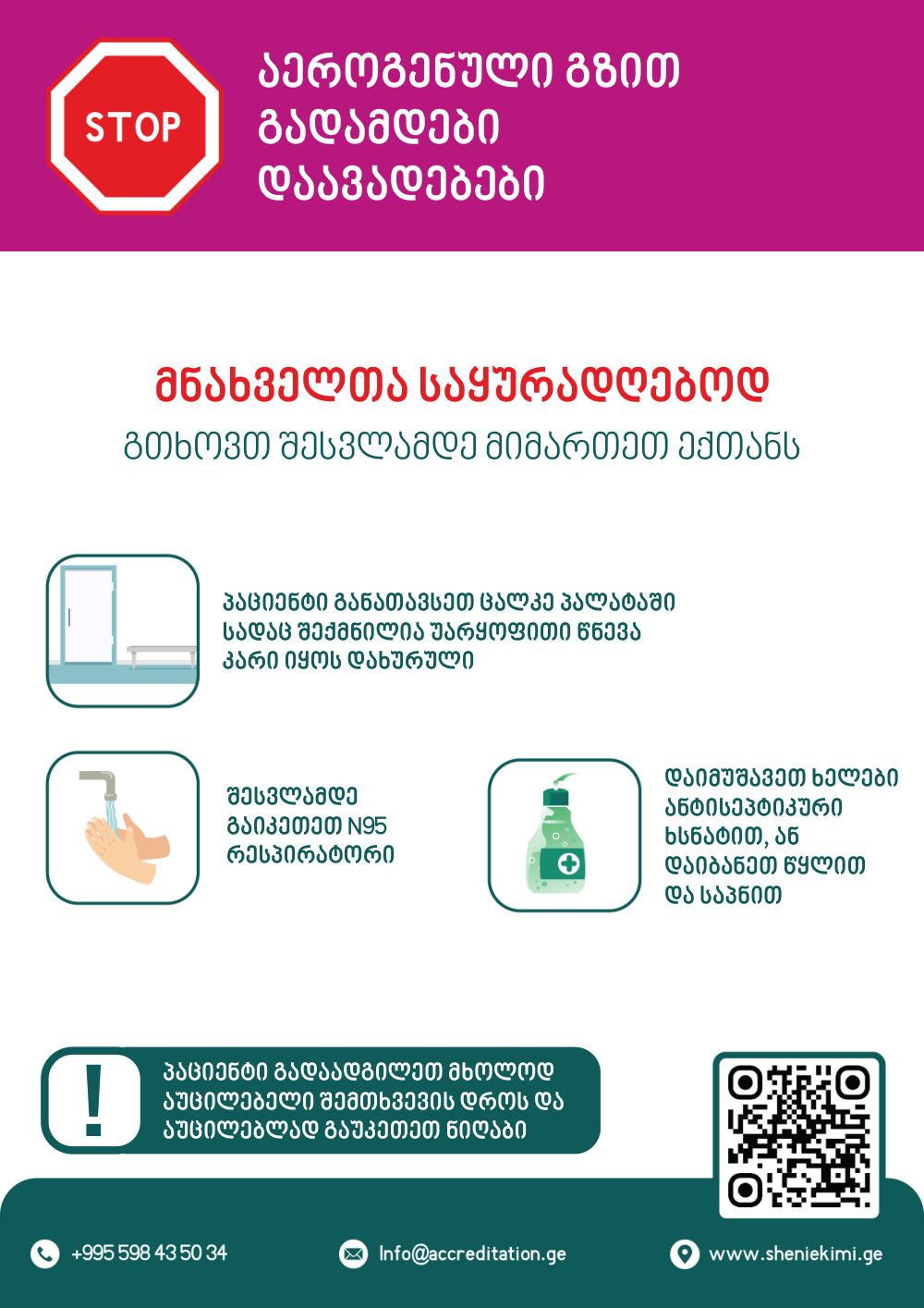
Free for any facility to print and display · Full poster library at france-asf.fr/posters/
Georgian original source / ქართული წყარო
Respiratory Hygiene — Georgian IPC Guideline (gapince.org.ge)
 Published by the Public Health Institute of Georgia (PHIG) · IPC Resources Library · Contact PHIG
In plain language
Respiratory hygiene and cough etiquette reduce the spread of respiratory infections in waiting areas and wards: covering coughs and sneezes, using tissues and masks, cleaning hands and keeping distance where possible.
Key actions checklist
- Post signs at entrances and waiting areas
- Provide tissues, masks, bins and hand rub
- Offer masks to patients with respiratory symptoms
- Separate symptomatic patients in waiting areas where possible
- Teach staff to model the behaviour
International guidance
Questions and answers
Does this apply outside epidemics?
Yes. It is part of standard precautions all year, including in the influenza season.
Who should wear a mask?
Patients with respiratory symptoms in shared areas, and staff according to risk assessment.
Related pages
Note for professionals. This resource summarises the national and international documents named on the page and is intended for health professionals; it is not individual medical advice. Decisions about any patient rest with the treating clinician, and the original guideline prevails where it differs. Guidance changes: last verified 16 October 2026. Corrections and updates: info@accreditation.ge. Legal notice.