
Transmission-based precautions are applied in addition to standard precautions[1][3] when a patient is known or suspected to have an infection that requires additional control measures beyond the standard set. There are three categories, each targeting a specific transmission route.
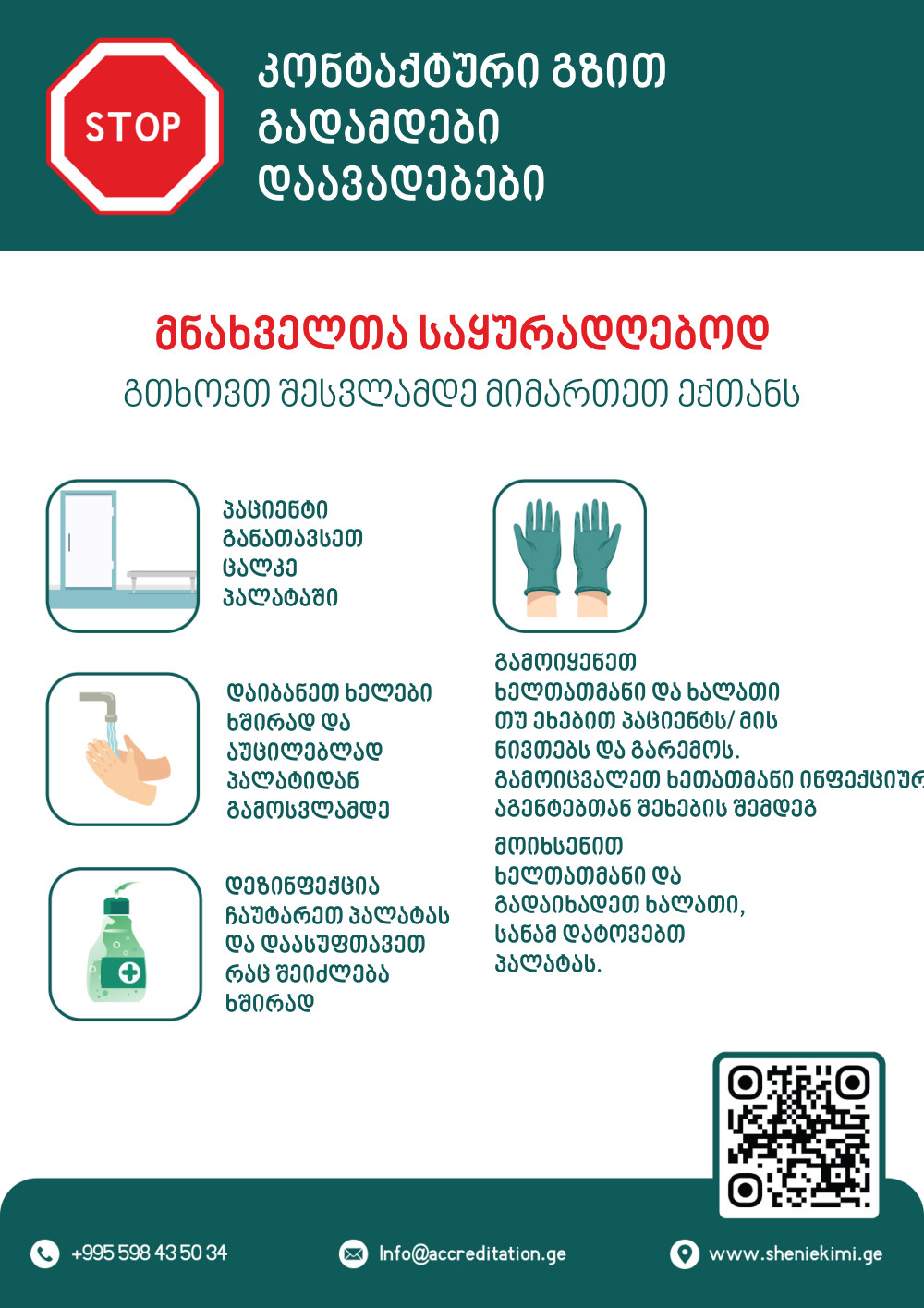
1. Contact precautions
| Requirements | |
|---|---|
| Indications | MRSA, VRE, ESBL-producing organisms, C. difficile, norovirus, scabies, impetigo, wound infections with resistant organisms, any patient with uncontained secretions or excretions |
| Room | Single room preferred; if not available — cohort with same pathogen; spatial separation minimum 1 metre; dedicated toilet |
| Gloves | Don before entering room; remove before leaving; hand hygiene immediately on removal |
| Gown | Don before entering room if contact with patient or environment anticipated; remove before leaving |
| Equipment | Dedicate non-critical equipment (stethoscope, blood pressure cuff, thermometer) to the patient; if shared, clean and disinfect before use on another patient |
| Environmental cleaning | Enhanced cleaning — twice daily minimum; C. difficile: use 0.5% sodium hypochlorite (alcohol-based products ineffective against spores) |
| Patient movement | Limit to essential only; patient dons surgical mask and clean gown during transport |
| Duration | Until culture-negative (for MRSA/VRE) or clinical resolution; C. difficile: minimum 48h after last liquid stool |
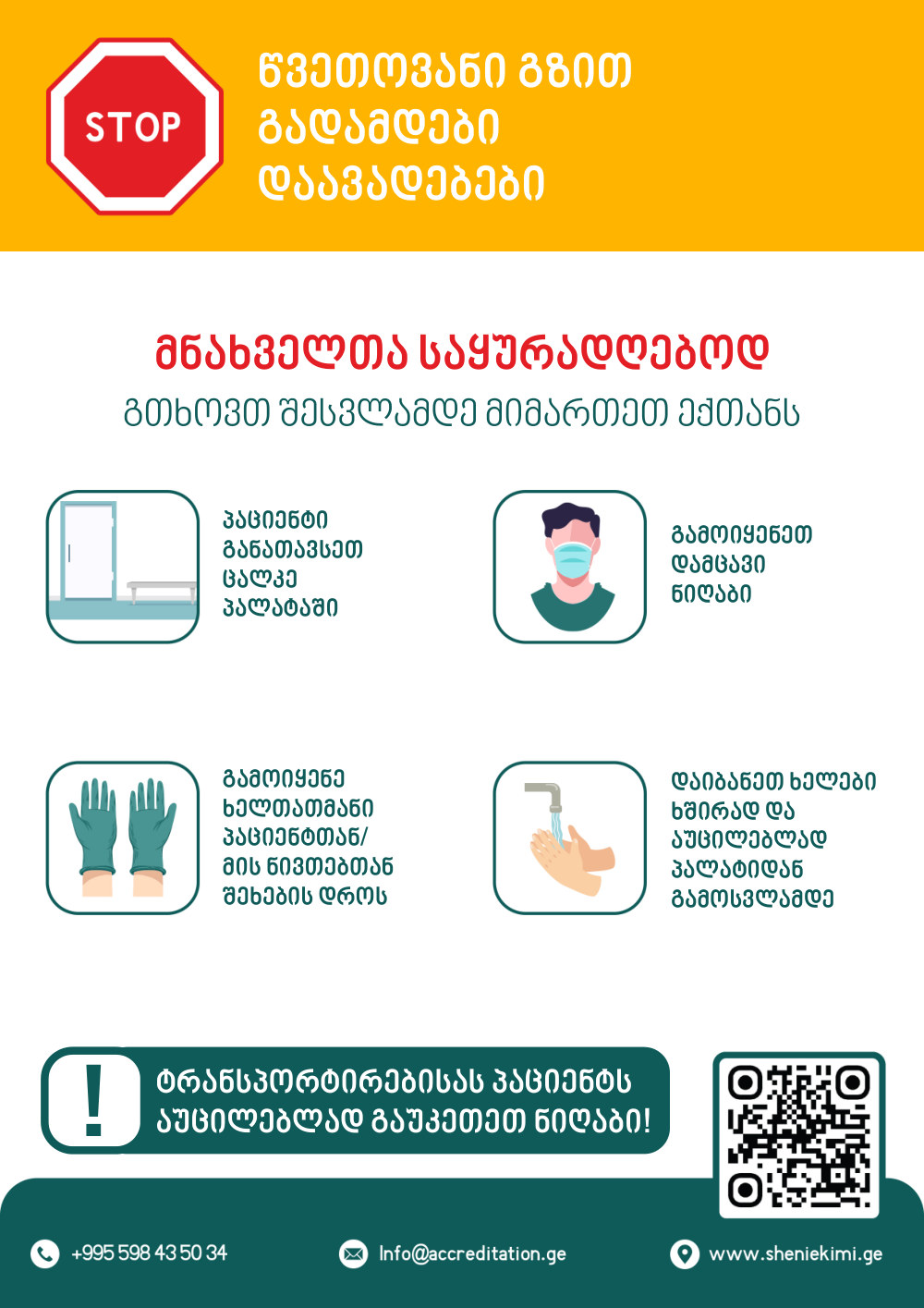
2. Droplet precautions
| Requirements | |
|---|---|
| Indications | Influenza, pertussis, meningococcal disease, rubella, mumps, adenovirus, seasonal coronavirus (non-SARS), diphtheria (pharyngeal) |
| Room | Single room OR minimum 1 metre spatial separation with curtain; door may remain open |
| Mask | Surgical mask — worn when within 1 metre of the patient; all staff entering the room |
| Gloves and gown | Per standard precautions (not universally required unless contact precautions also indicated) |
| Eye protection | If risk of splash or spray to mucous membranes |
| Patient movement | Limit to essential; patient wears surgical mask during transport |
| Duration | Influenza: 5 days after symptom onset; pertussis: until 5 days of antibiotic therapy completed; others: per clinical resolution |
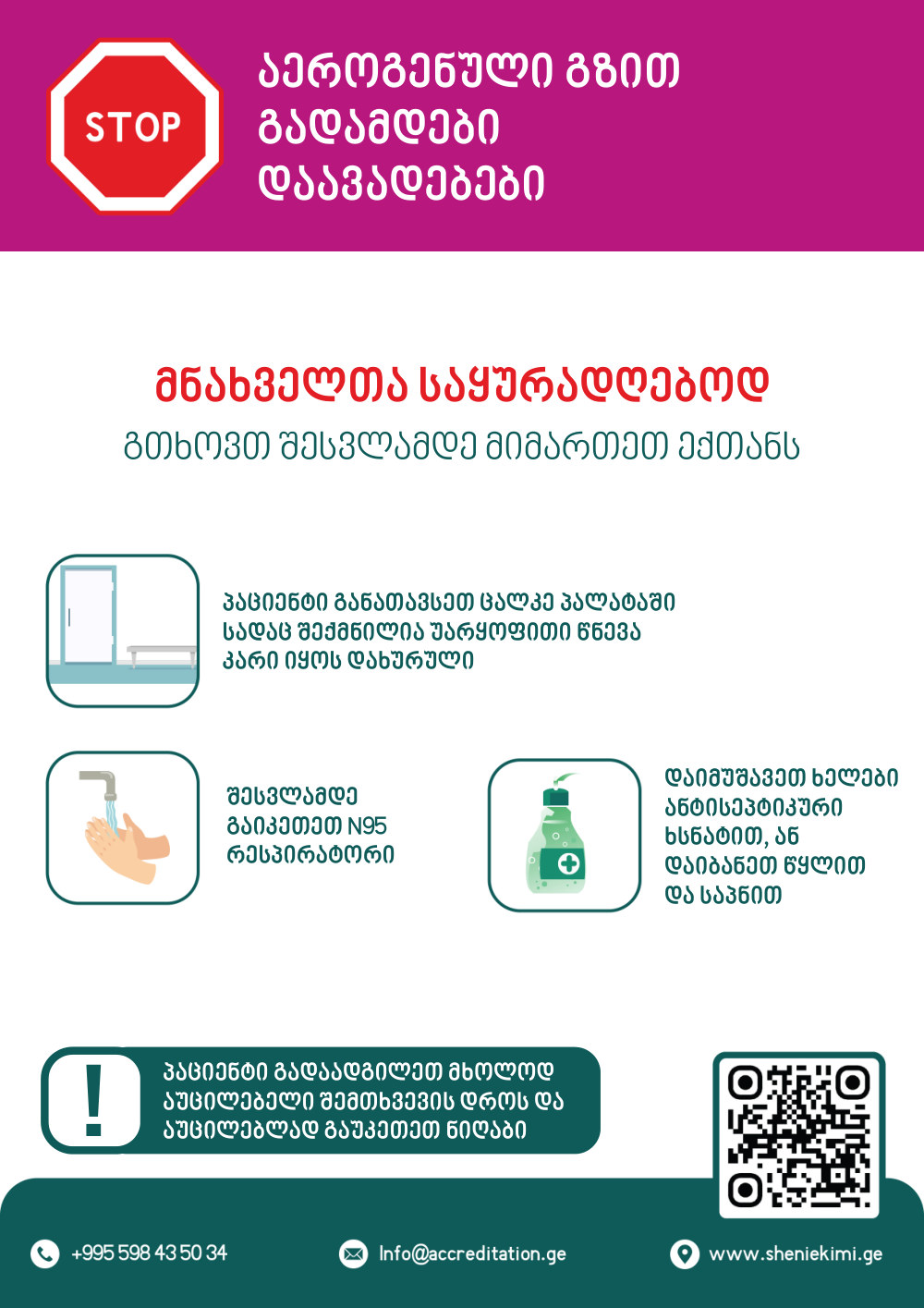
3. Airborne precautions
| Requirements | |
|---|---|
| Indications | Pulmonary or laryngeal tuberculosis (confirmed or suspected), measles, varicella/disseminated zoster, SARS-CoV-2 (during aerosol-generating procedures), novel influenza with pandemic potential |
| Room | Negative-pressure room (minimum 12 air changes per hour[1]; exhaust to outside or HEPA-filtered); door kept closed at all times; entry log maintained |
| Respiratory protection | N95/FFP2 respirator (fit-tested) for all staff entering room; surgical mask insufficient for airborne pathogens |
| Gloves and gown | Required for all patient contact |
| Patient movement | Strictly limited; patient wears surgical mask during transport; use designated route minimising exposure to others |
| Duration — TB | Until 3 consecutive negative sputum smears (collected 8h apart, one early morning) AND clinical improvement AND effective therapy for minimum 2 weeks |
| Duration — measles/varicella | Until all lesions crusted (varicella) or 4 days after rash onset (measles); immunocompromised: duration of illness |
Upload the droplet precautions door sign.
Upload the airborne precautions door sign.
ASF Patient-Safety Posters — Free, Print-Ready (A4) · Keep the ASF mark
Free for any facility to print and display · Full poster library at france-asf.fr/posters/
Georgian original source / ქართული წყარო
Transmission-Based Precautions — Georgian IPC National Guideline
References
- [1] Siegel JD, Rhinehart E, Jackson M, Chiarello L; Healthcare Infection Control Practices Advisory Committee. 2007 Guideline for Isolation Precautions: Preventing Transmission of Infectious Agents in Healthcare Settings. Am J Infect Control. 2007;35(10 Suppl 2):S65–S164. doi:10.1016/j.ajic.2007.10.007
- [2] WHO. Infection Prevention and Control of Epidemic- and Pandemic-Prone Acute Respiratory Infections in Health Care. World Health Organization. 2014;—:—. Available at: https://www.who.int/publications/i/item/infection-prevention-and-control-of-epidemic–and-pandemic-prone-acute-respiratory-infections-in-health-care
- [3] WHO. Guidelines on Core Components of Infection Prevention and Control Programmes. World Health Organization. 2016;—:—. Available at: https://www.who.int/publications/i/item/9789241549929
- [4] Ministry of IDPs, Labour, Health and Social Affairs of Georgia. Order N01-268/o on the National Infection Prevention and Control Programme. MoLHSA Georgia / Matsne. 2016;—:—. Available at: https://matsne.gov.ge/ka/document/view/3293056
 Published by the Public Health Institute of Georgia (PHIG) · IPC Resources Library · Contact PHIG
In plain language
When a patient has or may have an infection spread by contact, droplets or the air, extra precautions are added to standard precautions: single rooms or cohorting, specific protective equipment and restrictions on movement.
Key actions checklist
- Identify the route of transmission early
- Place the patient in a single room or cohort as required
- Use the protective equipment for the route (gloves and gown; surgical mask; respirator)
- Keep dedicated equipment for the patient
- Clean the environment and equipment thoroughly at discharge
International guidance
- WHO — IPC during health care when COVID-19 is suspected or confirmed
- WHO Guidelines on core components of IPC programmes (2016)
Questions and answers
When is a respirator needed instead of a mask?
For airborne infections such as tuberculosis and measles, and for aerosol-generating procedures.
Can precautions be stopped?
Yes, once the infection is excluded or no longer transmissible, according to the protocol.